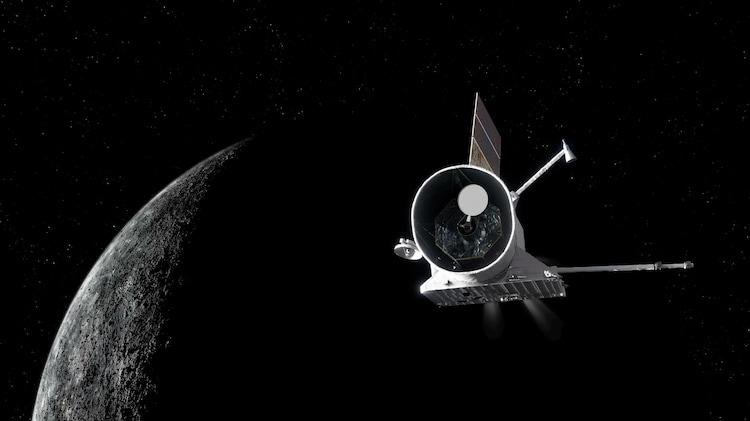
Mercury Mission Faces Technical Setback as BepiColombo Achieves 77% of Its Planned Orbital Velocity Change
Quick Summary
The BepiColombo Mercury mission has encountered a software glitch following its successful arrival around Mercury after an eight-year journey. The spacecraft’s thrusters stopped firing earlier than planned during its initial orbital positioning manoeuvre. Consequently, BepiColombo achieved approximately 77% of its intended velocity change.
The European Space Agency (ESA) confirmed that the spacecraft remains safe and maintains a stable orbit. Mission teams have identified a software issue and continue assessing its impact. The agency also retains December 9 as the planned separation date for its two scientific orbiters. Routine scientific operations should begin in April 2027.
Introduction
The BepiColombo Mercury mission has encountered a technical setback following its arrival around the planet. However, the spacecraft remains stable, according to the European Space Agency. The mission experienced a software glitch during its initial orbital positioning manoeuvre, interrupting the planned thruster operation.
Despite this unexpected development, ESA confirmed that the spacecraft remains safe and operational. The agency also expects the mission to maintain its planned December separation schedule.
BepiColombo Mercury Mission Encounters Software Glitch
The European Space Agency confirmed the spacecraft’s successful Mercury orbit insertion on Saturday. However, officials reported a technical problem during the subsequent positioning manoeuvre. BepiColombo’s thrusters began firing as scheduled during its approach. The spacecraft passed approximately 635 kilometres above Mercury’s surface. The planned thruster burn required 37 minutes to complete.
However, an unexpected software glitch interrupted the manoeuvre before its scheduled completion. The spacecraft automatically entered safe mode to protect its systems. This protective mechanism suspends non-essential activities when unexpected operating conditions arise. Mission controllers subsequently investigated the interruption and assessed the spacecraft’s condition.
Spacecraft Achieves 77% of Planned Velocity Change
The interrupted thruster manoeuvre affected BepiColombo’s orbital positioning calculations. Mission control confirmed that the spacecraft achieved approximately 77% of its planned velocity change. This figure reflects the difference between the intended and actual manoeuvre.
ESA teams investigated the problem alongside Airbus and other mission partners. Their investigation traced the interruption to a software glitch. Nevertheless, the spacecraft maintained a safe and stable orbit around Mercury. Additional thruster burns will help modify its trajectory during the coming months.
December 9 Separation Schedule Remains Unchanged
BepiColombo combines two scientific orbiters developed by European and Japanese space agencies. The European Mercury Planetary Orbiter belongs to ESA. Japan’s Mercury Magnetospheric Orbiter represents JAXA’s contribution.
Both spacecraft carry different scientific objectives and specialised observation instruments. They will separate from their composite configuration in the coming weeks. ESA continues targeting December 9, 2026, for this important mission milestone. The separation will allow both orbiters to begin their individual scientific investigations.
Mercury Mission Targets Major Scientific Discoveries
BepiColombo aims to investigate several unanswered questions about Mercury. Scientists want to understand how the planet generates its magnetic field. They also plan to investigate water ice inside permanently shadowed polar craters. These deposits exist despite Mercury’s extremely hot surrounding environment.
The mission will also examine unusual surface formations called hollows. Scientists remain interested in understanding their origins and physical characteristics. BepiColombo launched in 2018 and travelled eight years before reaching Mercury. It represents the third spacecraft to visit the planet. It also becomes only the second spacecraft to orbit Mercury.
FAQs
1. What happened to the BepiColombo Mercury spacecraft?
BepiColombo experienced a software glitch that prematurely interrupted its thruster burn during its initial orbital positioning manoeuvre around Mercury.
2. Is the BepiColombo spacecraft safe after the technical glitch?
Yes, ESA confirmed that BepiColombo remains safe and maintains a stable orbit around Mercury despite the unexpected interruption.
3. How much of the planned thruster manoeuvre did BepiColombo complete?
The spacecraft achieved approximately 77% of its intended velocity change before its thrusters stopped firing earlier than scheduled.
4. When will BepiColombo separate its two scientific orbiters?
ESA currently plans to separate the European and Japanese scientific orbiters on December 9, 2026, following its successful orbital insertion.
5. What scientific discoveries will the BepiColombo Mercury mission investigate?
The mission will examine Mercury’s magnetic field, polar water ice deposits and unusual surface formations called hollows to understand the planet better.
Key Takeaways
- BepiColombo successfully entered Mercury’s orbit after travelling from Earth for eight years.
- A software glitch interrupted its initial thruster burn before the manoeuvre reached completion.
- The spacecraft achieved approximately 77% of its intended velocity change during orbital positioning.
- ESA confirmed spacecraft stability and retained the December 9 separation schedule.
- Scientific operations are expected to begin in April 2027, targeting several mysteries surrounding Mercury.
Conclusion
The BepiColombo Mercury mission continues despite an unexpected software-related setback during orbital positioning. Its stable orbit provides reassurance about the spacecraft’s immediate safety and mission progress. Mission teams are now preparing for the December separation milestone.
The upcoming scientific operations could reveal important details about Mercury’s magnetic field, polar ice and unusual surface formations. These discoveries may deepen scientific understanding of the solar system’s innermost planet.

 Magazine
 info@luminarytimes.com
 +1-8308642693