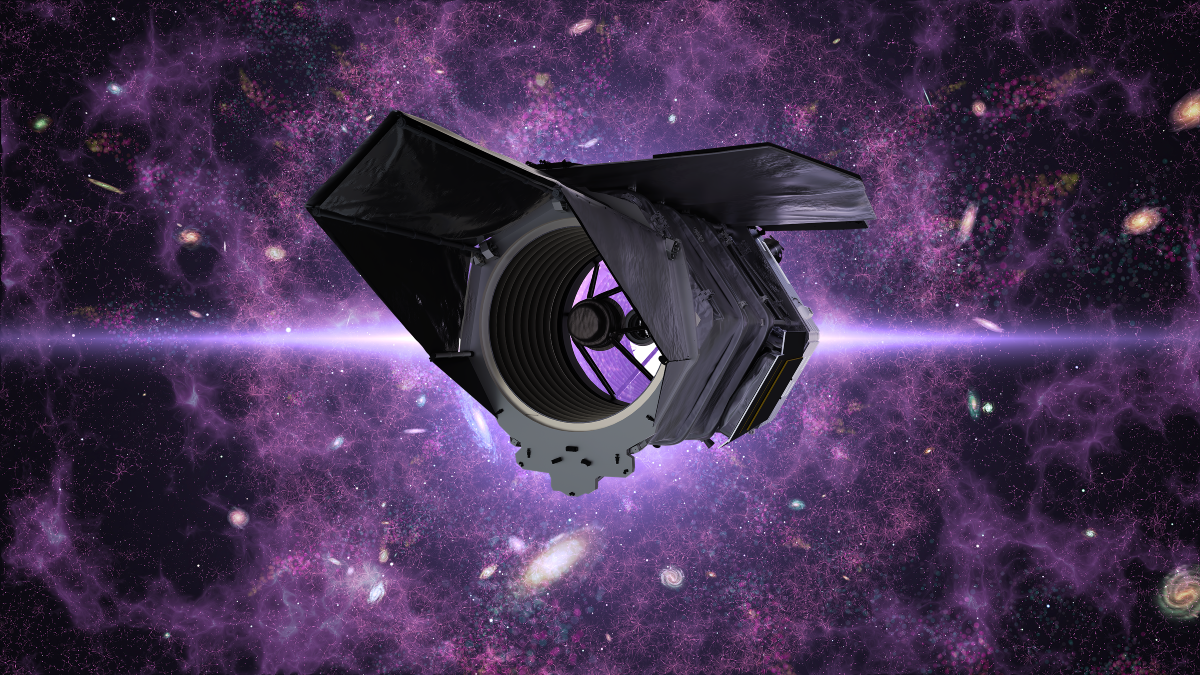
NASA’s New Observatory Opens a Wider Window into the Universe
Quick Summary
The Nancy Grace Roman Space Telescope has launched after decades of planning and advanced development. NASA expects this powerful observatory to transform astronomy through extensive surveys across enormous cosmic regions. Its field of view reaches nearly 100 times wider than the Hubble Space Telescope.
The telescope will investigate dark matter, dark energy, distant galaxies, and planetary systems. Additionally, Roman could discover thousands of exoplanets throughout the Milky Way. Most importantly, unexpected discoveries could reshape astronomical research and influence future space exploration.
Introduction
The Nancy Grace Roman Space Telescope is opening an extraordinary new chapter in modern space exploration. NASA launched the observatory on August 30 after years of careful planning and preparation. The mission will survey enormous sections of space while capturing valuable astronomical data efficiently.
Unlike targeted observatories, Roman will repeatedly scan broad regions across the universe. Therefore, scientists expect the mission to support discoveries across nearly every major astronomy field.
Nancy Grace Roman Space Telescope Targets Dark Mysteries
The Nancy Grace Roman Space Telescope will investigate dark matter across enormous regions of the universe. Scientists will examine subtle distortions appearing within millions of distant galaxies during these extensive surveys. These distortions can reveal how invisible dark matter influences large-scale cosmic structures. Meanwhile, Roman will examine dark energy and its connection with accelerating universal expansion. It will map billions of galaxies across different stages of cosmic history.
Additionally, scientists expect observations of around 21,000 predictable stellar explosions. These explosions can help researchers calculate cosmic distances with greater accuracy. Together, these observations could challenge existing theories surrounding dark energy and cosmic expansion.
Roman Telescope Could Transform Exoplanet Discoveries
The Roman Telescope will search for distant planets through two powerful observational techniques. First, transit observations can identify planets crossing directly in front of their host stars. This approach could potentially reveal nearly 200,000 planetary candidates during Roman’s mission. However, Roman will also use gravitational microlensing to discover distant planetary systems.
This technique can identify planets located significantly farther from their host stars. Scientists estimate Roman could discover around 1,400 planets through microlensing observations. Consequently, researchers can compare distant planetary systems with our own solar system. Such comparisons may reveal how common or unusual our planetary neighborhood actually remains.
A Wider Cosmic View Could Reveal Unexpected Discoveries
Roman will also observe black holes, exploding stars, rapidly moving asteroids, and other cosmic phenomena. It will repeatedly examine the crowded central region of the Milky Way galaxy. That region contains most galactic stars but remains comparatively poorly explored by astronomers. Dense cosmic dust prevents many conventional telescopes from observing deeper into this region.
However, Roman can provide valuable observations across this heavily obscured galactic environment. It could also improve assessments of potentially hazardous asteroids traveling near Earth. Meanwhile, its wide surveys may uncover previously unknown cosmic phenomena across distant regions. These unexpected discoveries could ultimately influence astronomical research for decades.
FAQs
1. What is the Nancy Grace Roman Space Telescope?
The Nancy Grace Roman Space Telescope is NASA’s next-generation observatory for wide-field cosmic surveys and advanced research.
2. Why is the Roman Space Telescope important for astronomy?
Roman can survey enormous cosmic regions while collecting valuable data across several major astronomical research fields.
3. What will the Roman Space Telescope study?
Roman will study dark matter, dark energy, galaxies, exoplanets, stars, black holes, and potentially hazardous asteroids.
4. How many exoplanets could the Roman Space Telescope discover?
Roman could identify nearly 200,000 planetary candidates through transit observations during its planned scientific mission.
5. When will the Roman Space Telescope begin scientific observations?
Roman must complete deployment and commissioning before starting its major scientific observation program across the universe.
Key Takeaways
- Roman will survey enormous cosmic regions with exceptional speed, efficiency, and scientific precision.
- Its observations could clarify major mysteries surrounding dark matter and dark energy.
- The telescope could discover thousands of planets beyond our solar system.
- Roman will explore the Milky Way’s crowded and poorly studied central region.
- Unexpected discoveries could shape astronomical research and future space exploration for decades.
Conclusion
The Nancy Grace Roman Space Telescope represents a major milestone for modern astronomy. Its extensive surveys will dramatically expand humanity’s understanding of the observable universe.
At the same time, Roman could answer important questions that remain unresolved today. Most excitingly, unexpected discoveries may become its most important scientific contribution. Therefore, the mission could shape astronomical research and cosmic exploration for decades.

 Magazine
 info@luminarytimes.com
 +1-8308642693