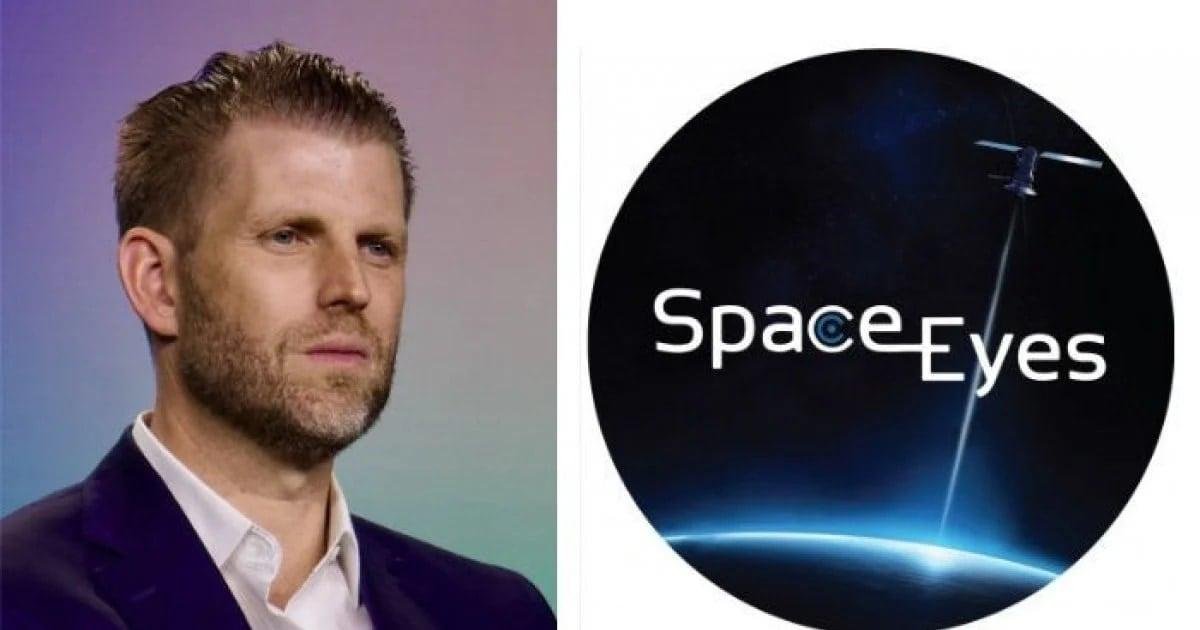
Space-Eyes SPAC Deal Marks Eric Trump’s Strategic Defense Technology Expansion
Quick Summary
The Space-Eyes SPAC deal will take the defense technology company public through a merger valued at $638 million, marking an important development in the AI-powered defense sector. Eric Trump recently became the company’s third-largest private investor and will also serve as a strategic adviser after the transaction closes.
The company develops advanced counter-drone and geospatial intelligence technologies for government agencies and commercial organizations. It also plans to use the expected $251.7 million in gross proceeds to expand operations, secure larger contracts, and strengthen global partnerships. If all approvals move forward as planned, the combined company will begin trading on the Nasdaq under the ticker symbol CUAS during the fourth quarter of 2026.
Introduction
The Space-Eyes SPAC deal has attracted strong attention across defense technology markets. The agreement values the combined company at $638 million. Eric Trump recently became the company’s third-largest private investor. He will also guide future strategy after the merger closes.
Meanwhile, the company plans significant expansion through government and commercial contracts. The transaction also reflects rising investor confidence in AI-powered defense technologies.
Space-Eyes SPAC Deal Values Company At $638 Million
Space-Eyes agreed to merge with McKinley Acquisition Corp through a SPAC transaction. The combined business carries a valuation of $638 million. The transaction could provide up to $251.7 million in gross proceeds.
Those funds include trust account capital and planned private investment financing. The companies expect to complete the merger during the fourth quarter of 2026. Regulatory and shareholder approvals remain necessary before closing.
Eric Trump Takes Strategic Advisory Role After Investment
Eric Trump recently became the third-largest private investor in Space-Eyes. He will also serve as a strategic adviser after the merger completes. His role includes advising on drone-related security challenges and emerging technologies.
In addition, he introduced potential board candidates during transaction discussions. His representatives have not publicly commented on the announcement.
Space-Eyes Plans Expansion Through AI Defense Technologies
Space-Eyes develops artificial intelligence-powered counter-drone and geospatial intelligence systems. The company currently operates mainly as a research-focused technology developer. However, leadership plans commercial expansion through third-party manufacturing partnerships.
This strategy supports larger government contracts across multiple global regions. The company also targets commercial clients, including cruise operators and data centers. Its technology portfolio includes SeaWatch for maritime intelligence monitoring. Another platform, Morpheus, detects and responds to unmanned aerial threats using artificial intelligence.
Contract Pipeline Signals Future Business Growth
Space-Eyes currently generates nearly $1 million in annual revenue. However, leadership focuses on future contract opportunities instead of current earnings. The company reportedly negotiates contracts worth nearly $35 million across five years.
Potential projects include Caribbean drug trafficking surveillance and Middle East defense applications. Another opportunity involves preventing drone-based contraband deliveries into American prisons.
Defense Technology Sector Draws Strong Investor Interest
Investors increasingly support companies developing artificial intelligence defense solutions. Governments continue increasing spending on drone detection and battlefield intelligence systems.
Space-Eyes also follows a software-focused business model with higher growth potential. Therefore, investors expect future contract expansion to drive long-term business performance.
FAQs
1. What is the Space-Eyes SPAC deal?
The Space-Eyes SPAC deal will take the defense technology company public through a merger. The combined business carries a valuation of $638 million.
2. What role will Eric Trump play in Space-Eyes?
Eric Trump will serve as a strategic adviser after the merger. He also recently became the company’s third-largest private investor.
3. What technologies does Space-Eyes develop?
Space-Eyes develops AI-powered counter-drone systems and geospatial intelligence platforms. Its products support governments and commercial organizations.
4. How much funding could the merger generate?
The transaction could provide up to $251.7 million in gross proceeds. Those funds support expansion and future contract opportunities.
5. When will the Space-Eyes merger close?
The companies expect to complete the merger during the fourth quarter of 2026. The deal still requires regulatory and shareholder approvals.
Key Takeaways
- Space-Eyes will become a public company through a $638 million SPAC merger.
- Eric Trump joined the company as a major investor and strategic adviser.
- The company develops advanced AI-powered counter-drone defense technologies.
- Management targets significant government and commercial contract expansion.
- The merged company expects to trade on Nasdaq under ticker CUAS.
Conclusion
The Space-Eyes SPAC deal highlights growing confidence in AI-driven defense technology businesses. Eric Trump’s investment and advisory role strengthen the company’s public market profile.
Meanwhile, planned funding could support international expansion and larger contracts. If approvals arrive on schedule, Space-Eyes could begin its next growth phase before the end of 2026.

 Magazine
 info@luminarytimes.com
 +1-8308642693