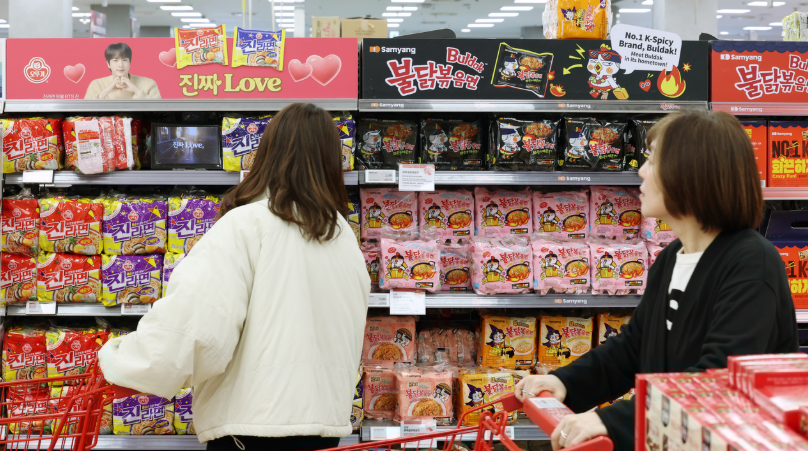
South Korean food exports reached a staggering $13.62 billion in 2025. This record growth highlights a massive global shift toward spicy, convenient meals. Specifically, South Korean noodle companies now dominate international shelves through strategic expansion and cultural influence. Overseas sales for instant noodles topped $1.52 billion recently. This milestone marks the first time a single food category crossed that billion-dollar threshold.
Consequently, brands like Nongshim and Samyang prioritize foreign markets over saturated domestic ones. South Korea faces a shrinking population and strict government price controls. These factors limit local profit margins significantly. Conversely, international markets allow for much higher pricing power. For instance, American consumers often pay double the price found in Seoul. This price gap provides a lucrative incentive for rapid global scaling.
Additionally, the “K-Wave” serves as a powerful engine for this culinary surge. Popular TV dramas frequently showcase characters enjoying steaming bowls of spicy ramyun. This organic product placement creates instant global desire among younger viewers. Therefore, manufacturers align their branding with massive K-pop icons to boost visibility. Nongshim recently partnered with the group Aespa for a global campaign. Meanwhile, Jin from BTS represents the popular Jin Ramen brand worldwide.
Furthermore, global inflation plays a vital role in this export boom. Rising restaurant costs in the U.S. and Europe push consumers toward affordable alternatives. Korean noodles offer a premium yet cheap solution for budget-conscious shoppers. Innovation also keeps the momentum high for these aggressive food exporters. New flavors like cheese-infused spicy noodles resonate deeply in China and Central Asia.
Moreover, social media challenges have turned specific products into viral sensations. The famous “fire noodle” challenge vaulted Samyang’s Buldak line into the global spotlight. Despite occasional regulatory hurdles regarding heat levels, demand continues to skyrocket. Experts predict these companies will capture even more market share by 2028. They successfully combine cultural prestige with high-quality, innovative food technology. Ultimately, the world’s appetite for South Korean flavors shows no signs of slowing down. These companies will continue to bet big on every hungry international consumer.

 Magazine
 info@luminarytimes.com
 +1-8308642693